
A smartphone is a mobile computing device. It can be used for internet browsing, gaming, social networking, entertainment, and much more. Mobile devices are usually smaller than traditional computers (e.g., desktop P.C.s) and can operate using less power.
They’re very popular because many people like the convenience of smartphones, making them their primary computing devices when they don’t need access to their main computer or laptop to do something simple like checking email or looking up movie times.
The features of a smartphone are a touch screen, various applications from which to choose from an app store, internet access through Wi-Fi or cellular networks, and search tools.
A touch screen is the primary method of input for most phones. Some have buttons and a touchscreen, but those tend to be more expensive. Depending on the model, some smartphones can even shoot high-definition pictures on various cameras, usually front and back-facing ones. Most also come with GPS, a compass attached as an integrated feature, and an electronic compass.
In contrast, let’s take a look back at smartphone ancestry. The history of smartphones can be traced back to the 1990s. In 1994, the IBM Simon Personal Communicator was released. It could send emails (and faxes), and sketch on its touchscreen with a stylus included in the package- but not much more. You couldn’t surf websites or even consult your calendar because NCSA’s Mosaic browser only came out one year earlier, and home computers were just starting to adapt.
The smartphone was born in the 1990s but became mature with the new millennia. On October 1, 2001, NTT DoCoMo began the first 3G network in Japan, allowing for videoconferencing and huge email attachments.
However, the smartphone revolution began at Macworld in 2007, when Steve Jobs unveiled the iPhone. The first cell phones required a keypad and could browse a watered-down version of the internet. The iPhone’s huge touchscreen may browse websites like a desktop computer while remaining more attractive than users have ever seen.
The iPhone was revolutionary in many ways, but one thing that made it stand out from other phones of the period was its expansive features. The user could check email or stream video using Safari while browsing internet content with their browser without problem on an open platform like iOS, where gestures are intuitive and third-party applications can be accessed through Apple’s own “store.”
What Was the First Smartphone?

The Kyocera QCP-6035 was one of the first cell phones to hit the American market, coming on the market in January 2001. Moreover, it was among the first gadgets to bring a PDA with a mobile phone together. The Qualcomm PDQ (800 and 1900), introduced in 1999 by Qualcomm’s handset business (Qualcomm Personal Electronics), was succeeded by the Kyocera KCP-1600, released in 2000.
The device appears to be dual-boot, with the cellphone firmware functioning independently (though it is accessible through a user interface) from the Palm OS operating system. Unlike most contemporary smartphones, the Palm operates independently when its phone operations are disabled.
The phones are sufficiently linked to transmit critical information and instructions back and forth. Still, the operating parameters of the phone (settings, phone book, speed and voice dialing, call history, etc.) are controlled using Palm OS.
A flip is used to conceal the Palm buttons, Graffiti area, and part of the screen. Physical keys are set on a flip for cell phone use that hides the Palm buttons, Graffiti region, and part of the screen.
When the flip is closed, the screen displays the phone system. When it is opened, it changes to Palm operation. Tapping the flip opens the phone and activates various features. Phone activities are managed through the flip buttons and a side thumbwheel.
The Palm OS system makes use of the integrated cell phone as an incorporated modem. It allows the Palm to utilize any IP-based Palm apps, such as email clients and web browsers. In addition, the phone’s HotSync cradle may also be utilized to connect it to a computer as an external modem.
SMS may be received by phone, but there was no method to send them before later firmware updates. It is WAP-enabled, but it is not MMS-compatible.
The 6035 comes with 8 M.B. of memory. It is impossible to make it bigger, but the resolution is 160×160 pixels. You can do HotSync and I.R. communication with this Palm just as you would with a normal one.
The Kyocera QCP 6035 smartphone combines voice communication, text messaging, email, and numerous web methods into one Palm OS-based organizer. It has a built-in speakerphone, voice-activated dialing, and a convenient jog-dial for changing phone settings, contact information, and call history.
The QCP 6035 has a 64 MB ROM and a Palm OS v3.5 operating system, allowing it to run thousands of applications written for the Palm OS platform. In addition, the QCP 6035 supports various wireless Web access protocols, including HTML browsers with Secure Socket Layer (SSL) encryption to secure sensitive information. Users may also access corporate or personal email accounts using wireless email clients incorporated into their devices.
Who Invented the First Smartphone?

Marty Cooper, by name Marty Cooper, (born December 26, 1928, Chicago, Illinois) was an American engineer who led the team that in 1972–73 built the first mobile cell phone and made the first cell phone call. He is considered to be the father of cellular phones.
Cooper received his bachelor’s degree in electrical engineering from the Illinois Institute of Technology (IIT) in Chicago (1950). He joined the U.S. Navy and served during the Korean War, after which he worked for Teletype Corporation until 1954, when he began working at Motorola as an engineer. He earned a master’s degree in Electrical Engineering from IIT (1957).
At Motorola, Cooper worked on several projects involving wireless communications, including the first radio-controlled traffic-light system, which he patented in 1960, and the first hand-held police radios launched in 1967. He was named to the Board of Directors in 1985, and he served as an executive vice president and director of research and development (1978–83) for the firm.
AT&T was a partner for the previous two decades, and the company made a lot of money from its exclusive contracts. Motorola didn’t want AT&T to have complete control over cell phones, so it was concerned about the future of its mobile business.
He was put in charge of creating a cell phone, which he felt should not be tethered to the automobile. At that time, Motorola had patented the DynaTAC (Dynamic Adaptive Total Area Coverage) phone. It was 23 cm (9 inches) tall and weighed 1.1 kg (2.5 pounds). Its battery lasted for 35 minutes of conversation before dying down.
On April 3, 1973, in New York City, Cooper introduced the DynaTAC phone at a press conference. To ensure that it worked before the press conference, he made the first public mobile phone call to AT&T’s Joel Engel, head of the rival project, and bragged that he was using a portable cellular phone.
In 1983, after years of refinement, Motorola debuted the DynaTAC 8000x, the first portable cell phone for consumers. Despite its hefty price tag of $3,995, the device was a success.
In 1987, Cooper departed Motorola and launched Cellular Business Systems, Inc., which became the world’s largest provider of billing services for cellular phones. In 1986, after selling CBSI to Cincinnati Bell for $23 million, he and his partners established Dyna LLC.
Dyna was formed in 1995 as a nexus for launching numerous businesses, such as ArrayComm (1996), which created software for wireless systems, and GreatCall (2006), which provided wireless service for the Jitterbug, a cell phone with limited features designed for the elderly. In 2013, he was awarded the Charles Stark Draper Prize by the National Academy of Engineering.
Where Was the First Smartphone Invented?
IBM had an idea for a computer-style phone in the 1970s, but it wasn’t until 1992 that they showcased one at the COMDEX trade show in Las Vegas.
The IBM Simon Personal Communicator, introduced in 1994 and costing $1,100, was a more sophisticated version of the IBM Simon Personal Communicator. Yes, today’s phones are considerably more affordable, but $1,100 in the 1990s was nothing to scoff at.
The notion for a computer-style phone was first conceived by IBM as early as the 1970s, but it wasn’t until 1992 that the firm unveiled a prototype at the COMDEX computer and technology trade show in Las Vegas. The Simon prototype can transmit facsimiles, emails, and mobile pages and make and receive calls.
It also had a touchscreen that allowed you to call phone numbers. Apps for a calendar, address book, calculator, scheduler, and notepad were extra features. The phone could also receive and send text messages, as well as access the internet via Wi-Fi. In addition, IBM proved that the phone could display maps, stocks, news, and other third-party applications with certain modifications.
When Was the First Smartphone Invented?
The first smartphone, developed by IBM, was created in 1992 and released to the public in 1994. It was known as the Simon Personal Communicator (SPC). Despite its small size and lack of elegance, the gadget incorporated numerous features that would later become standard on every smartphone.
The introduction of the Motorola MicroCell in 1992 was one step closer to reality for what we now refer to as smartphones. This early cell phone never took off, but regular phones continued gaining popularity and becoming more compact while still being able to explore all sorts of features with variety across manufacturers, including flip models or even ones that can be used as a clamshell by opening up just one part.
In 1991, the internet was made widely accessible by a newfangled World Wide Web. This once non-existent world started to take form in digital form. It became popularized when one website would pop up every now and then that focused on being cool as we know it today – mostly text-based websites without any commercials or ads whatsoever.
However, there was no internet browser on the first smartphone, and computers were still using terrible web browsers. Email access, on the other hand, was a major selling point. Unfortunately, it might also send faxes, which despite decades of effort, has yet to be completely eradicated.
The business people who used Simon and cell service in those days were still spotty and expensive. To make calls via Simon, you can plug into an optional cable that will allow your phone call to use more reliable landline systems, which is less costly than trying out new technology like smartphones today.
When Did Smartphones Meet the Internet?

The smartphone has been connected to a 3G network only since the year 2000. In other words, a wireless communications standard was developed to allow portable devices to connect to the internet wirelessly.
The introduction of voice texting enhanced the possibilities for smartphones, allowing things like videoconferencing and sending considerable email attachments. However, surfing the internet from your phone came at a cost. While the device’s price had dropped to $300 – $700, data costs were still too expensive for most people.
The Nokia 9000 Communicator was the first mobile phone with Internet access. By 1996, however, the company had already been in operation for several years. Exorbitant costs from the providers initially restricted the viability of getting online. NTT DoCoMo began offering i-Mode in Japan in 1999, which has been credited as the beginning of mobile phone Internet services.
The first website (in late 1990) was info.cern.ch, which was run on a NeXT computer at CERN. The WWW project’s initial web page, accessible at http://info.cern.ch/hypertext/WWW/TheProject.html, included the World Wide Web project content. However, a duplicate page from 1992 is accessible on W3C’s site, which no longer exists.
The World Wide Web was founded in 1989. However, search engines for the Internet had existed long before then. They were limited in scope and typically processed only page titles. WebCrawler, the first full-text web search engine (today’s version), was released in 1994.
Justin Hall launched Justin’s Links from the Underground, a web-based journal, in 1994. It was initially an online tour of the Web, but it gradually became more personal over time. He was dubbed the “founding father” of personal blogging by The New York Times Magazine. Naturally, the term “blog” wouldn’t be coined until years later (1997’s “weblog,” which subsequently evolved into “blog” in 1999).
What is the Development Period of Smartphones?

- IBM and The World’s First Smartphone: In 1992, IBM unveiled a ground-breaking device that far exceeded the capabilities of its predecessors. The Simon Personal Communicator was a prototype smartphone that didn’t get to customers until 1994.
The gadget was similar to many contemporary smartphones and mobile devices. Highlights included:
- Touch screen
- Fax
- Notes and Calendar
- Apps and other widgets that would become widespread decades later
It was a daring entry into the market, but it wasn’t the most straightforward starting point for a mobile device. You could describe it as ahead of its time, and few consumers were willing to join in.
The Simon was cutting-edge for its time, but it has nothing on today’s cellphones. Instead, it had a small monochrome LCD and a one-hour battery life.
It was beautiful to make landline phone calls rather than being at the mercy of high carrier costs. But, unfortunately, after six months, it only sold 50,000 units for $1,100 retail MSRP.
However, Simon has unquestionably established a solid foundation for others to create.
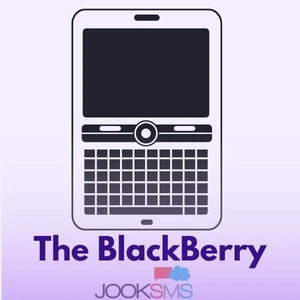
- The Rise of BlackBerry: The BlackBerry 5810 was the first BlackBerry mobile phone ever produced. It included most of what you think of when you hear “Blackberry,”
- Calendar
- Music
- A full keyboard
- Advanced security
- Internet access
- But you had to make calls through a headset.
BlackBerry was once a popular smartphone for business professionals. However, the company released too many devices and eventually lost out to Apple’s iPhone in that market segment – until now.
After struggling to find their target customer base for many years, they finally bottomed out with a 0% market share in 2017.

- The Introduction to Apple: Apple transformed how people use portable technology for years with their iPod, but what they unveiled in 2007 set the stage to take this transformation one step further.
The iPhone was the most advanced consumer smartphone on the market with its cutting edge features and specifications. It can be bought at only $499 for 4 G.B. of memory, or you could get an iPhone 8GB model that costs around 600 dollars more. People took notice when this device came out because its features were incredible. Plus, there’s no other carrier than AT&T -so users had to get an exclusive deal with them?
Apple sold 1.4 million iOS devices in its first year on the market and has since skyrocketed to 11.6 million in 2008.
Apple had the iPod Video, but it lacked an aspect ratio suitable for viewing videos. The iPhone came with a wide LCD screen that made video playback much better suited to this device’s capabilities – it would soon become one of Apple’s best selling products ever.
The iPhone 4’s battery life was a huge improvement over previous models. It provided 8 hours of talk time and 250 hours on standby. It meant that consumers could now enjoy their phones for longer periods without needing to charge them every day, which is great news considering how much we use our gadgets these days.
The next-generation Apple’s design is almost the same as that of its doomed predecessor. However, it also brought new features to the iPhone, making it more user-friendly and convenient. The hardware was excellent, but the software – in the form of third-party applications – weaved a web between iPhone and its users that has never been seen before.
Every day brought another million apps to the iPhone, bringing its feature set closer to that of a full-fledged P.C. The smartphone industry exploded soon after. In 2015, 84 percent of Americans claimed they couldn’t go a day without their phone.
- The Major Smartphone Advancements of 2008: The technology in many aspects has changed dramatically over the years. For example, from 2007-2018, there is a significant difference in how much better things can be now and then compared to what was available during this period before we had all these advancements.
- There’s a lot more memory within.
- Devices are significantly more powerful and faster.
- Multiple programs can be used at the same time.
- H.D. cameras are used.
- Music and video streaming, as well as online gaming, are simple to do.
- Instead of minutes or hours, the battery lasts for days.
It is a well-known fact that smartphones have evolved into two different operating systems. One is Google’s Android, which many hardware manufacturers have adopted to take on Apple and their iOS to compete for market share.
For the time being, Android is leading.
Android has a worldwide market share of more than 42%, according to StatCounter. It is greater than even Microsoft Windows on desktop and laptop P.C.s.
With the advances in technology, most people have replaced their digital cameras and iPods with a phone. At the same time, iPhone users are worth paying more for because they offer so many features compared to Android counterparts that do not come close on price alone. There is no debate about which platform has greater quality sound or picture.
Android phones are becoming more and more popular, which means the market is growing day by day. However, with this growth comes some serious competition; Android devices, on average, cost less than 1/3rd as much as iPhones do (according to ABI Research findings). Thanks largely due to its diverse hardware manufacturers using it as their smartphone operating system of choice- cheap smartphones with incredible specs that offer something for everyone.
- The Future of Smartphones: The earlier cell phones, such as IBM’s Simon, showed us what mobile devices could be capable of. Apple and the iPhone fulfilled their promise in 2007. They are still becoming a regular part of our daily routine today, in 2018.
In the past, we used our smartphones to keep in contact with friends and family. But now, many other features make these devices more than simple communication tools such as digital cameras or music players; personal assistants like Siri and voice search.
So what’s next?
Smartphones continue to grow, and anticipation is high for what will come next. A throwback to the flip phone with a folding touch screen seems likely, as voice commands are also expected – maybe even update how we interact?
Gone are the days when we had to give up many of the features we had on our laptops or desktops when we were on the go. Instead, mobile technological advancements have given us more options in approaching our work and leisure activities.
What was the First Touchscreen Phone?

The first phone to feature a large capacitive touchscreen was the LG Prada, announced in December 2006.
The late 2000s and early 2010s saw a shift in the way we use our smartphones. There was an evolution from products with keyboards towards ones where you could swipe or tap your fingers instead, which is more convenient when out on the on-the-go.
The Prada phone was designed in collaboration with Italian luxury designer Prada and features a 3″ 240×400 pixel screen, a 2-Megapixel digital camera that can shoot video in 144p, an LED flash, and a tiny mirror for self photos.
Surprisingly, the phone was priced at around $800. (The original iPhone cost $499; the most recent version, the iPhone 11, costs over $1,000.) On the other hand, the LG Prada appeared somewhat dim in comparison to the iPhone’s near-painfully bright screen. According to them, the minimalist monochrome look was intended to reflect “the Prada experience,” which meant it matched with the company’s sleek, anti-status black nylon accessories.
The LG Prada is a beautifully designed and slim phone that will give you all the essentials while not feeling too big in your hand. The 3″ touchscreen display has over 256,000 colours, a 5:3 ratio and only around 155 pixels per inch (PPI). Moreover, it can take photos up to 240 x 400 resolution.
LG Prada is a phone with outstanding features at that time, including a card slot, MicroSD slot for 256 MB memory, call records up to 40 dialled numbers, 40 received calls, and 40 missed calls. In addition, the phone has 8MB of internal memory.
The LG Prada offers a dependable phone with extensive battery life. The 800 mAh cell will last up to 300 hours in standby mode and can also take 3 hours of calls before it needs to be charged again. All the while, the smart technology prevents you from missing notifications when your device is inactive or turned off.
Who Invented Smartphone Touchscreen?

Dr Samuel Hurst is the father of touch screen technology. During the graduation exams in 1971, he was required to read a huge amount of data while working as an instructor at the University of Kentucky Research Foundation. In order to save time, he created the first touch sensor, which he called “Elo graph” (electronic graphics), allowing him to input data more quickly.
Capacitive touchscreens were created first, followed by resistive touchscreens in the field of science. In the early 1960s, E. A. Johnson of AT&T Bell Labs is credited with inventing capacitive touchscreens. He wrote a paper titled “Touch display – a novel input/output device for computers.” Some of today’s smartphones include the technologies and characteristics of such touchscreens.
The resistive touchscreens, on the other hand, eventually killed off the idea of capacitive touchscreens. George Samuel Hurst is the inventor of this form of touchscreens, which he initially dubbed “thick glass.” His tale is very intriguing, and it took place at Berea College.
In the late 1960s, George and a few additional PhD specialists were engaged in atomic physics research with a nearly depleted Van de Graff accelerator. A number of researchers wasted days verifying that this narrative was factually correct.
As a result, George considered using electronically conductive paper to read a few two-George wanted to file a patent to ensure that his research remained secure when he went to the UK. The conclusion of this hypothesis and his later laboratory activities, on the other hand, were not particularly convincing. So, the chapter was slightly shut then, but he had ideas in his thoughts. So, George and his nine other buddies went to ORNL.
They wanted to pursue it further because what took place in Berea College’s laboratory was unanticipated and unintentional. The team dubbed this technology “Elographics,” and began working on a complete touchscreen for computers. By the 1980s, he had developed what we now know as resistive touchscreen technology.
The name derives from the fact that our computer or smartphone responds to our pressure and has no electrical conductivity. Furthermore, resistive touchscreens are now more cost-effective, and so they are increasingly used by mobile phone manufacturers in dimensional positions. It saved time and rekindled George’s interest in touch screens for computers.
When Did Smartphones Become Popular?
Cell phones have been popular since the cellular revolution that began in the 1990s. The number of mobile users has more than tripled since 1990, from 11 million to almost 2.5 billion in 2020.
Of course, we’ve seen the famous “brick” phones improve into something far more remarkable during this period… but let’s take a look at how they changed.
In the mid-1980s, mobile phone technology was first developed to enable people out and about on foot. This innovation led not only to increased productivity but greater safety for workers as well. By 2011 it had been estimated that more calls were being made with a cell phone than any other kind of device: wired or wireless alike.
What Came to First iPhone or Android?
Android came first. The Android operating system for cellular telephones and tablet computers was developed in 2003 by the American technology company Google Inc. To create this innovative automotive application software, they began with their original project idea of creating an operating system on digital cameras before creating today’s top mobile device platform.
In 2004, the project was altered to become a smartphone operating system. In 2005, Google Inc. acquired Android Inc., renamed Android Software and Services Group (Google). The Android team chose to build their project on Linux, an open-source operating system for personal computers.
On January 9, 2007, Steve Jobs unveiled the iPhone at the Macworld conference, which garnered significant media attention. On October 4, 2014, Jobs announced that the first iPhone would be available in late November. On June 29, 2007, the first iPhone was made available.
Who Made the First Android Phone?
Andy Rubin, Rich Miner, Nick Sears, and Chris White established Android Inc. in Palo Alto, California, in October 2003. According to Rubin, the Android initiative has “tremendous potential in producing smarter mobile devices that are more aware of their owner’s location and preferences.”
The company’s early inventions were to develop an advanced operating system for digital cameras, which formed the basis of their pitch in April 2004.
After learning that the camera market was not large enough, the company decided to go after a larger potential customer base. Five months later, they diverted all of their efforts and pitched Android as an operating system alternative with Symbian and Microsoft Windows Mobile in competition for mobile phone users’ wallets.
Who Made the First iOS Phone?

Steve Jobs, Apple’s CEO at the time, envisioned something different. He wanted to create a product for people who use their fingers rather than with styluses and other tools like Newton, released nearly 20 years ago (1993).
In order to make the device thinner and lighter, he decided that it would require a triple-layered capacitive multi-touch touch screen. This new technology was very advanced at the time of development, which helped remove physical keyboards/mice – much like when tablets were in use during human-machine interfaces or Point Of Sale systems back then.
The group of engineers was recruited by Jobs to investigate his idea as a side project. When they reviewed the prototype and its user interface, he saw that this could be developed into something big: an emerging market for touch screen phones competing against established brands like Nokia. So the whole effort began in 2005 with Project Purple 2.
Apple created the device during a secretive and unprecedented collaboration with Cingular Wireless, now part of AT&T. The development cost for this project has been estimated at $150 million over thirty months – not including all it takes to produce or market the phone itself.
Apple had to do something different when designing the iPhone because it was competing with cellphones coming out of Motorola. Rather than relying on a committee, Apple left everything in-house and created an innovative product for Cingular Wireless which became one of their most successful lines following this change.
Steve Jobs, the visionary behind Apple, announced their most revolutionary product yet. The iPhone was launched on January 9 2007, in a keynote address at Macworld Conference & Expo held at Moscone West San Francisco, California. Steve said, “This is the day that I’ve been waiting for two and half years.” He went on to say how they’re going to reinvent phones-and boy, did he do just that.
Jobs introduced the iPhone as a combination of three devices: A “widescreen iPod with touch controls”, the mobile phone that is also good for Internet communication, and a revolutionary new way to communicate.
Who is Steve Jobs?

Steve Jobs was an American businessman and inventor. His name can be found on the front of many Apple products, which has made him a very well known figure in today’s society. It is believed that his genius with computers and technology has helped shape what we know as electronic devices today.
Jobs is responsible for the success of such revolutionary products as the iPhone and iPad. He also played a key role in Pixar Animation Studios. Their films before his death were among the most profitable ever released by any movie studio after those from Walt Disney Productions.
Jobs’ success is generally associated with Apple, yet Jobs’ collaboration with Apple was a rocky one in the early days. After being dismissed from his eponymous firm in 1985, Jobs created NeXT, which developed computers for commercial and educational use.
Despite the fact that NeXT wasn’t particularly popular, it is still an important part of today’s computers. Despite the difference in name, OS X is still based on versions of Nextstep. In addition, the renowned “Wolfenstein” and “Doom” computer games were developed on NeXTcube computers.
Disney was the gold standard of full-length animated feature films before the mid-1990s, and it wasn’t until Toy Story’s success in 1995 that Pixar became famous. Pixar’s success has been exponential. Each sequel increased the studio’s momentum and established lucrative film industry in Hollywood. Before its purchase by Disney, the firm generated approximately $3.2 billion in worldwide revenue.
Although Jobs had no experience in graphic design or video production, he felt that Pixar’s computer technology and animation would eventually match Disney’s. The company’s most significant impact was on its strategic direction, including guiding and managing Pixar’s initial public offering in 1995.
Pixar’s initial public offering (IPO) gave Steve Job the flexibility to rapidly grow the firm. According to many people, jobs’ determination and vision for Pixar gave the firm the support it needed to grow. As a result, Pixar is regarded as one of the most influential film studios in the world today.
Apple devices are not only innovative, but they are also environmentally beneficial. During his term as CEO, Jobs promoted an initiative in support of environmentally pleasant items. As a result, Apple uses environmentally friendly materials like recycled aluminum, polymers, and papers in its devices to minimize pollution.
Similarly, all Apple products are Energy Star certified, demonstrating their compliance with EPA standards for energy efficiency. In addition, jobs’ legacy has been continued by Apple, which has committed to becoming carbon neutral by 2030.
Apple’s next major product release was the iPhone. The iPhone allowed users to make phone calls, listen to music, and browse the Internet on a single touchscreen-capable device by combining the functions of an iPod and a phone.
The iPhone had an innovative App Store, which allowed consumers to get apps without having to purchase them from wireless carriers. Before the App Store, wireless companies controlled the content available on phones.
On November 1, 2018, Apple announced that it would no longer provide sales figures for its smartphones. However, worldwide sales for the iPhone have increased to over 1.5 billion since its initial launch in June 2007.
Jobs was well-known for his active involvement in the success of goods and enterprises, as seen at NeXT, Pixar, and Apple. Jobs was known by a small group of people behind the scenes as a philanthropist. While his philanthropic efforts were rarely mentioned, many have attested to Jobs’ charity.
Jobs, despite his wealth, didn’t want people to remember him. He gave over $50 million to Stanford hospitals through Apple and supported numerous AIDS-fighting efforts. Jobs’ objective as a philanthropist was not to be acknowledged; it was simply to assist those who required it.
His philosophy is to make beautiful, powerful, and intelligent products to make technologies more accessible; “Technology alone can’t improve quality of life”, says Jobs. The legacy continues today with his son Reed, who took up control of iOS after Jobs’ death in 2011.
What is Steve Jobs’ Contribution to the Development of Smartphones?
Steve Jobs Co-Founded Apple: In April of 1976, Steve Jobs, Steve Wozniak, and Ronald Wayne established Apple Computer in the garage of his Los Altos home on Coast Drive. The company’s main goal was to sell Wozniak’sWozniac’s invented device, known as the Apple I. The machine was little more than a circuit board, and the company’s initial capital came from the sale of Jobs’ Volkswagen bus and Wozniak’s programmable calculator.
After one year, Wayne would depart, Apple Computer would become Apple Inc., Jobs and Wozniak would produce huge successes in the Apple II, Mackintosh, iPod, iPhone, and Mac line of computers. In later years, it expanded into other countries and became a worldwide corporation with interests in everything. In 1981, the firm would break several records by going public with an unprecedented stock offering, and in 1983 it made the quickest debut (at the time) on the Fortune 500 list of America’s top businesses.
Apple’s brand would transform the way we use technology, becoming one of the most powerful businesses in recent memory and more than 40 years later becoming the first U.S. firm to be valued at over $800 billion in 2017 (Bloomberg).
- Steve Jobs Revolutionized Smartphones Through iPhone: The iPhone is perhaps the one product that cemented Steve Jobs’ reputation worldwide. In 2003, Jobs was adamant that Apple should not enter the tablet P.C. and regular PDAs (Personal Digital Assistants) markets, opening that mobile phones would become information conveyors of the future. It may explain why a firm never considered entering the cell phone handset market developed the iPhone in 2007.
In his Macworld speech, Steve Jobs unveiled a widescreen iPod with touch, a ground-breaking mobile phone, and an internet communicator. The iPhone did not arrive until late July 2007. Nevertheless, it was the first device to contain all of those capabilities, debuting on June 29 that same year.
The iPhone revolutionized the way we communicate, with Face ID as the first and only true face recognition technology in a smartphone. It also made call quality enormous improvements. However, the product’s success may be gauged by the fact that Apple has sold more than 800 million units in less than a decade.
- Steve Jobs Developed Smartphone Features: After selling music through iTunes, the App Store provided a simple, centralized distribution system for apps. The iPhone SDK (software development kit) was introduced in 2008, allowing any developer anywhere globally to develop apps for the iPhone and sell them through iTunes’ App Store.
Since its debut in 2008, Apple has earned $70 billion for developers. The App Store has over 2 million apps downloaded about 130 billion times since January 2017.
How Smartphones Changed Messaging?
Smartphones changed messaging in a lot of different ways. From talking to each other to reading the newspaper to watching television to obtaining information on the internet via a computer and now a smartphone, the way we consume information has changed.
We may now access any type of information at any time, from anywhere. It’s both convenient and daunting at the same time. The same may be said for communication. Calls, text messaging, instant messaging, email, social media, blogs, and other modes of communication are all available on our smartphones.
Our access to information has a significant influence on our daily lives. Unfortunately, according to a recent study by Columbia University, we are very likely to forget information that we know we can readily retrieve again.
When we are asked a question, our first instinct is often to look for the answer on Google. While this can be helpful in some circumstances, ultimately, it affects how well prepared you will be during an interview and whether or not your potential employer would hire at all because lazy people know they’re always able to find information whenever needed.
We all know how technology has changed how we think, act, and interact with one another. That isn’t to say it’s a negative thing.
The ease of communication is something that has never gone unnoticed. The nature and use of mobile technology to reach people worldwide in an instant were just what we needed, making it easier than ever before not only to get hold of someone but also to keep up with them.
In this day and age of technology, it can be difficult to imagine a time before mobile phones existed. In fact, three forms of communication were the only ways people communicated with each other back in those days: letter writing (in case you needed urgent attention), pagers or check-sheet radio systems called “walkie talkies” for emergencies when everything else failed…and let’s not forget that ancient form known as “mail delivery.”
The late 90s and early 2000s saw a shift in the way we communicate. With flip phones from Motorola, Candybar cell phones like those made by Nokia or BlackBerry, as well as Palm Treo SmartPhones coming onto the market, it was easier than ever to reach anyone at any given moment with your phone.
The development of SMS was similar to that of any new technology. In 1995, the average American user sent out 0.4 text messages every month. Phones and networks adapted to better suit SMS as the years went by. In 1999, texts could finally be sent between different networks, making them more useful. In 2000, the average number of text messages sent in the United States was 35 per month per person.
SMS is the most widespread data platform globally, with over 81 percent of all mobile phone users accessing it. SMS has evolved into a versatile communication tool that allows us to keep tabs on our finances, send an email, and even order pizza.
There will be more options for how firms may reach their customers as new technologies and communication media emerge practically daily. So whether you prefer Pinterest to Twitter or Mobile Marketing over Yellow Pages, it’s important that when designing your branding strategy, in order not get left behind by what’s trending at any given time.
For each new technology presented to consumers, there will be early adopters and people who never adopt new technology at all. It can make reaching your customers difficult because they may not have been exposed to or reached by other communications channels such as print ads in magazines. Thus, text messaging should be among the first options you consider when trying to reach out with messages from marketers like yourself.
How Have Smartphones Changed How We Run Business?
Smartphones have made running a business much easier. With a phone, you can respond to customers and adjust your schedules with ease. In addition, you can take photos, post them online, and update your social media accounts from anywhere as well.
For those who have been doing the same thing for many years now, adjusting to this new technological world can be difficult or even impossible at times. But for those entrepreneurs looking to remix their old ideas with the speed of technology to increase profits and stand out from the competition, the change is an exciting prospect that they’ll take eagerly.

- Enhanced and Faster Communication: Smartphones have built on top of the fundamental layer of a phone conversation, adding additional levels of efficiency that make business communications more polished than ever before. Thanks to advancements in telecommunications technology, we can now send various media through text messages, emails, cloud services, and other platforms.
Smartphones can now provide face-to-face video contact with anybody on the planet through our fingertips, something that was previously considered a distant dream in science fiction movies and novels.
Calling plans have gotten cheaper in recent years. People are consuming more digital information, entertainment, and media content than they were ten years ago. The development of communication platforms has altered people’s lives and how they do business.
The speed of the internet and contemporary mobile phone technologies have boosted productivity, facilitated communication, and then altered everything, including our performance at work, through real-time project collaboration and file-sharing platforms.

- Multiple Uses and Access: Smartphones give us the flexibility to accomplish various activities in a variety of settings. It is incredible how much we may learn and discover in this current age. In addition, you can get access to several media and services from a device that readily fits in your pocket as long as you have a signal.
Smartphones have made it easier than ever to stay connected, whether you’re on your computer at home or in the comfort of your bed. You may check your email, pay your taxes, shop online, read the news, consult the stock market, read some interesting blogs, and obtain vital financial information from anywhere with a smartphone.
Not only that, but you may now pay for your gym membership or have a taxi cab called. Online shopping has gotten more accessible, and it is also cost-effective. Information sharing has likewise improved.

- Organization Made Easy: It used to be challenging to manage one’s large collection of business papers and files while keeping track of correspondences. However, modern-day cell phones can arrange and manage everything in one’s life neatly.
Smartphones make it simple to find and access your personal information, whether you’re looking for a certain email or an old memo from months ago or want to remember when you spoke with a customer for the last time.
Smartphones can also be used as personal assistants, allowing users to schedule appointments, bills, and other obligations. You may use applications to manage, file, and organize documents on your own.
You may arrange your images by when they were taken and where they were taken, as well as bills. Any old information or documents may be removed from these applications in a matter of seconds. It has grown to be that significant.

- Easier Payment Method: More individuals will employ their phones to pay for goods and services in the future. Secure payment applications that do not charge fees are proliferating. Money is more mobile than ever before, creating it easier to conduct online transactions.
With the new generation of smartphones and cloud-based payment services, merchants don’t need to engage an expensive and often clumsy Point of sale system. Smartphones remove many barriers to making a purchase, including cashier lines, credit cards, and personal identification.
The increased mobility made possible with a smartphone can increase revenue by removing any potential restrictions imposed by geography on when or where shoppers can make purchases.
In other words, you no longer have to go inside a mall or walk into a big-box retailer if that’s not really what you’re in the mood for; from your phone in your pocket anywhere becomes a place where you could suddenly be buying something – even while waiting in line at the bank.
What is the Contribution of Smartphones to Marketing?
Smartphones are changing marketing because they can be used to track how customers interact with companies. Smartphones allow businesses to know things they didn’t before – information like what customers are thinking and where they’re coming from.
Technology is changing how businesses operate; it’s also changing how customers interact with businesses, which can be a good thing. For example, smartphones allow for more transparency between companies and their customers because there are so many ways to communicate (like email, social media, and texting) that can be used during different stages of a business relationship.
Technology and smartphones, in particular, allows users to access information at the touch of a button – wherever they may be. The key is to make this technology work for you and your customers, not against you, by waiting for it to become outdated before trying something new again, such as text message marketing.

One benefit of the advent and initial rapid adoption of smartphones led to a proliferation of marketing channels; developers could now develop their apps for use on these mobile devices.
Many companies have now created mobile versions of their products, such as mobile banking apps to facilitate account management and mobile payment services such as Paypal and Venmo for quicker transactions. Marketers now only need one contact method with consumers because many people refuse to unlink or change their phone numbers after getting one.
Smartphones are mobile devices that help marketers to reach customers anywhere in the world. They also facilitate communication between businesses and consumers without any boundaries, especially when it comes to transmitting data like text messages. With this ease of access, marketers can now use SMS marketing as one effective strategy for promoting their products or services.
Technology is constantly changing, which leaves marketers to keep up with the times. Marketers need to know how their customers communicate and what they want from them. With smartphones, marketers can be aware of their audience’s preferences and use that information to promote products or services.
In addition, smartphones allow marketers to track consumer behaviour as a strategy in mobile marketing. The devices come equipped with various tools which can be used to learn more about consumers.
Communication is critical in marketing, and technology has made it much easier for companies and customers to keep in touch with their audience. For example, smartphones have opened the door for marketers to reach a broader range of people through texts, sharing content on social media and email their subscribers. This highly-connected environment is where marketers can successfully promote their products or services.
Smartphones have come a long way in the past decade. They’ve become more than just an item we use to communicate, and they’re now integral parts of our lives and daily routines. From texting to taking pictures and browsing the internet, these devices are how many people live their everyday life, but the evolution is far from over! The future holds even more changes for smartphones with new tech like 3D cameras or biometric sensors on the horizon.