

Audience segmentation is dividing a larger group of people into smaller subgroups based on shared characteristics. Audience segmentation is done so businesses can better target their marketing and advertising efforts to the subgroup most likely to be interested in their product or service. Subgroups can be divided based on many different demographic factors, such as geographic location, gender identity, age, ethnicity, income, or level of formal education. Subgroups could also be defined by the behavior exhibited, such as purchasing history. Businesses need to have an audience segmentation to devise an effective marketing strategy.
There are many benefits to using audience segmentation in your marketing strategy. Some benefits of audience segmentation are better targeting, increasing conversion rates, finding valuable insights and growth opportunities, reducing negative feedback, increasing response rates, reducing marketing expenses, and reducing long-term costs.
Let us look at the Six Significant Benefits of Audience Segmentation.
- Better Targeting and More Focused
- Increase Conversion Rates
- Find Useful Insights and Growth Opportunities
- Reduce Negative Feedback
- Increase Response Rates
- Reduce Marketing Expenses
- Long-Term Costs are Reduced
1. Better Targeting and More Focused

Segmentation is an effective strategy if a business wants to increase its focus on specific markets. When firms have better focus, they usually see improved business results. For example, many automobile companies are now concentrating on small car segments. The reason is that the growth potential in this area is higher than in the other segments, such as SUVs. Therefore, companies that base their strategy on a new target market segment will find that they are more profitable.
2. Increase Conversion Rates
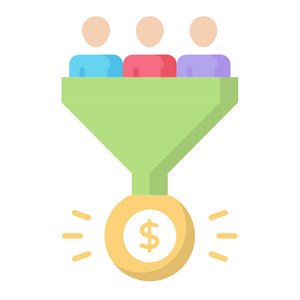
If you focus on a particular group, your recall, and equity with that group will improve. For example, to attract more young customers, focus on marketing content that appeals to them. If you focus on market segmentation, your brand loyalty will increase, and you’ll be able to compete against other businesses more effectively. Higher conversion rates usually lead to increased profits.
3. Find Useful Insights and Growth Opportunities
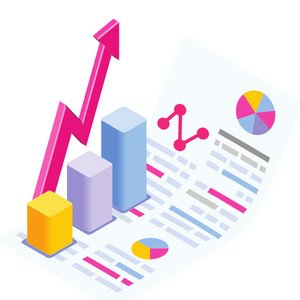
Analyzing customer segments can provide businesses with many valuable insights. These insights can help companies to grow and find new expansion opportunities. Segmentation is a powerful marketing tool that allows businesses to target specific groups of consumers. Geographic segmentation, in particular, will enable companies to expand their reach by catering to nearby territories.
Segmentation is critical when expanding your customer base. For example, if targeting fitness enthusiasts as Reebok does, then the company can expand its product line to include fitness clothing and accessories. However, expanding into new territory becomes easier if you have not learned who your potential customers are.
4. Reduce Negative Feedback
Audience segmentation helps businesses better understand their customers and meet their needs. As a result, companies are less likely to receive negative feedback. In addition, businesses can quickly address the issue if they receive negative feedback because they better understand their customer segments.
To know more about their customers’ needs, they can conduct call center analytics and get insights from it
Businesses segment audiences and offer a personalized experience that leads to happier customers. Not only might satisfied customers tell their friends about your company, but studies have shown that word-of-mouth is a significant reason consumers buy certain products. Capitalizing on this principle can increase conversions without running extra marketing campaigns.
5. Increase Response Rates

Businesses that segment their audiences usually see higher response rates. It is because companies can target their marketing messages to specific groups. Personalizing the experience for your customers makes them feel appreciated and valuable instead of like another number. Thus, they respond better to your marketing campaigns.
Showing your customers that you care will help to further the relationship between customer and business. Customers who have positive experiences with your brand are more likely to be loyal, whether by remaining a customer or marketing your products through word-of-mouth.
6. Reduce Marketing Expenses

Marketing to a general audience is not solving specific pain points that your target market might have. Instead, focus on creating a campaign directed at individuals and their unique problems. In doing so, you can maximize your conversion rate and produce better results.
By segmenting your customers, you create an advantage over the competition and improve brand recall and equity, customer retention rates, and communication. All of these factors result in increased profits for your business. After all, have you ever seen people haggling in showrooms for Nike shoes or BMW cars? These brands do not need to spend much on marketing because they have already built rapport with their customers.
7. Long-Term Costs are Reduced

The benefits of audience segmentation are not just short-term. Correctly identifying and targeting your audience can result in long-term cost reductions. In addition, you can reduce the likelihood of customer churn by segmenting your audiences.
Customers who feel like they are part of a community are less likely to churn. Creating a sense of belonging is essential for business success. If you can keep your customers happy, they will continue to come back and tell their friends about your company. With more time and money, you can improve your product, get customer feedback through interviews and surveys, and invest in employee training.
What is Audience Segmentation?
Audience segmentation involves identifying smaller groups within a target audience to create new opportunities for a business. The goal is to understand the needs better and wants of these subgroups so that you can more effectively market to them.
Segmenting your audience means dividing this big group into smaller, more specific subgroups. For example, you can target business travel companies catering to families or those working in a particular city. By making these distinctions, you’ll be able to segment your audience and get more out of your marketing strategies.
Remember that audience segmentation will enable you to make interactions with them more effective. In other words, you can send messages that are better aligned with their interests and needs rather than spamming them with irrelevant information.
Audience segmentation can help you keep your marketing efforts on target to align with your users’ needs.
Why Audience Segmentation is Important?
Audience segmentation is important because it is crucial in building and maintaining customer engagement. Customers prefer personalized, carefully tailored messages over bland, unfocused marketing that does not consider their specific wants and needs.
With audience segmentation, businesses can focus on creating relevant content for their target market. It ensures that customers will be more likely to pay attention to the message and take action. Segmentation also allows you to target a more specific audience with similar characteristics, making it more convenient and easy. Furthermore, targeting your content specifically for this audience makes them more likely to engage with what you say.
Segmenting audiences allows the marketing team to cater content to specific groups, making each customer feel valued. As a result, customers interact more with your brand leading to increased conversions and ROI for email marketing campaigns.
With segmentation, businesses deeply understand their audience’s problem. You can then use this understanding to explore areas where you could expand your marketing efforts for a more significant effect. Segmentation toolkits will help identify new development opportunities by analyzing trends within customer feedback.
What are the drawbacks of audience segmentation?

Audience segmentation also comes with several drawbacks, such as data limitations, more effort needed for targeted messaging, and challenges in determining which are most important for aim and messaging.
1. Your segments are only as effective as your data.
It is the most significant drawback of audience segmentation. If your data is inaccurate, then your segments will be as well. It can lead to marketing to the wrong people or missing out on opportunities with a valuable customer base.
Data quality is critical to a successful customer engagement plan because your audience segments are only as strong as the data that creates them.
It is not easy to ensure that your data is accurate and current. Sometimes people’s titles and their companies’ size can change, affecting demographic data. However, if you gather this information correctly, your behavioral data will be more accurate when generating leads.
2. It may take more effort to create more targeted messaging.
Another drawback of audience segmentation is that it may require more effort to create targeted messaging. It is because you need to consider the needs of each subgroup and develop different messages for each one.
3. You must understand which parts are essential to your aim and message.
When segmenting your audience, you must be careful to consider only the parts that are important to your aim and message. Otherwise, you may end up with segments that are too small or too large to be valid.
What are the best practices for audience segmentation?
Segmenting your audience is the most effective way to increase profitability for your company. Keep these segmentation best practices in mind to help you reach your targets.
- Implementing Segmentation in a Pragmatic Manner – Segments should be big enough that it’ll be worth your time to target them, and they need to be able to engage with what you’re offering. If you have too many segments, it will take up a lot of your time. More segments mean you won’t have the level of detail you want.
- Be Objective – Always be mindful of the different perspectives within your company regarding priority segments. The most common obstacle companies face when segmenting is prejudice.
- Use Quality Questionnaires – It’s crucial to ask high-quality questions during the segmentation process. They will assist you in understanding how to communicate with each section, what they are interested in purchasing, and their unique needs.
- Use analytic methods to segment your audience – Now that you have collected data from your surveys, it is time to analyze it. By doing so, you will be able to identify patterns and trends in your audience’s behavior.
- Focus on Your Goals – Keep your goals in mind when determining who to target in each audience segment. It will help you prioritize which criteria are most important.
How to Implement Audience Segmentation?
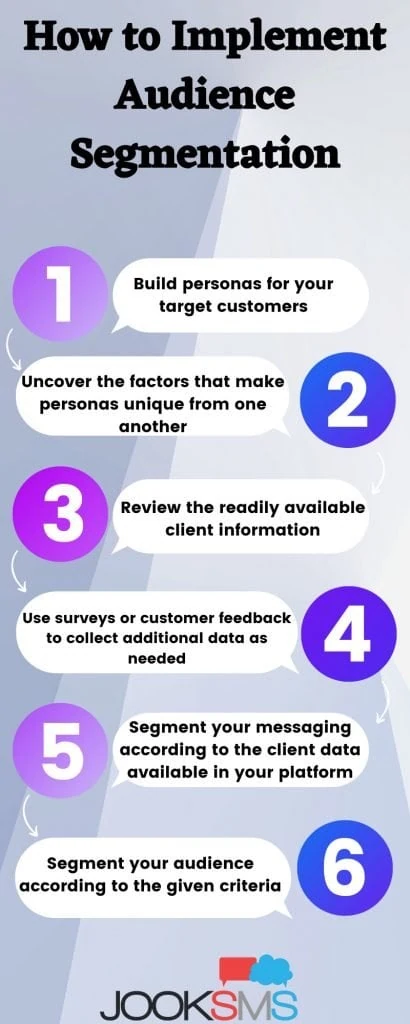
Breaking your audience into segments may feel daunting, but you’ll catch on quickly. Here are the steps on how to do Audience Segmentation to help get you started on the process.
- Build personas for your target customers – The first step in creating personas of ideal customers for audience segmentation is to determine a core set of demographics. The primary indicators are age, location, and gender. Other factors to consider include income, education, occupation, and marital status.
- Uncover the factors that make personas unique from one another – The second stage is to select a set of distinct qualities that distinguish your personas from one another. It will assist you in more effectively customizing your marketing messages to each group. Consider matters such as hobbies, requirements, and pain spots.
- Review the readily available client information – The next step requires you to check what information is available to your clients. It will help you determine the segmentation most appropriate for your business. Try to review audience information such as demographics, behavior, psychographics, and others.
- Use surveys or customer feedback to collect additional data as needed – Surveys and customer feedback are great ways to learn more about your target audience. This information can help you understand their demographics, psychographics, and behaviors.
- Segment your messaging according to the client data available in your platform – Once you have all the critical data regarding your target demographic, please double-check that your messaging system can separate them into groups based on your selected characteristics.
- Segment your audience according to the given criteria – The final step is using your selected standards to segment your audience. It will help improve the accuracy of your marketing communications and appeal more to those who are most likely customers of what you’re selling.
What are the Differences Between Audience Segmentation and Market Segmentation?
Market segmentation is the act of creating customer groups with shared needs and desires. By doing this, businesses can more efficiently target marketing efforts and sell their product or service.
On the other hand, audience segmentation is a process of dividing your total audience into smaller groups based on specific criteria, such as demographics, interests, or behavior. The goal of audience segmentation is to understand your audience better so you can communicate more effectively with them.
Audience and market segmentation are essential tools businesses use to understand their target market better. However, there are some critical differences between the two.
Market segmentation is focused on dividing a population into groups based on shared characteristics. In contrast, audience segmentation is focused on dividing your total audience into smaller groups to better understand and communicate with them.
Segmenting markets creates customer groups with shared needs and desires, whereas audience segmentation involves understanding your target market so you can communicate with them more efficiently.
Market segmentation is a broad strategy that can target many different audiences, while audience segmentation is a more targeted approach focused on understanding one specific audience.